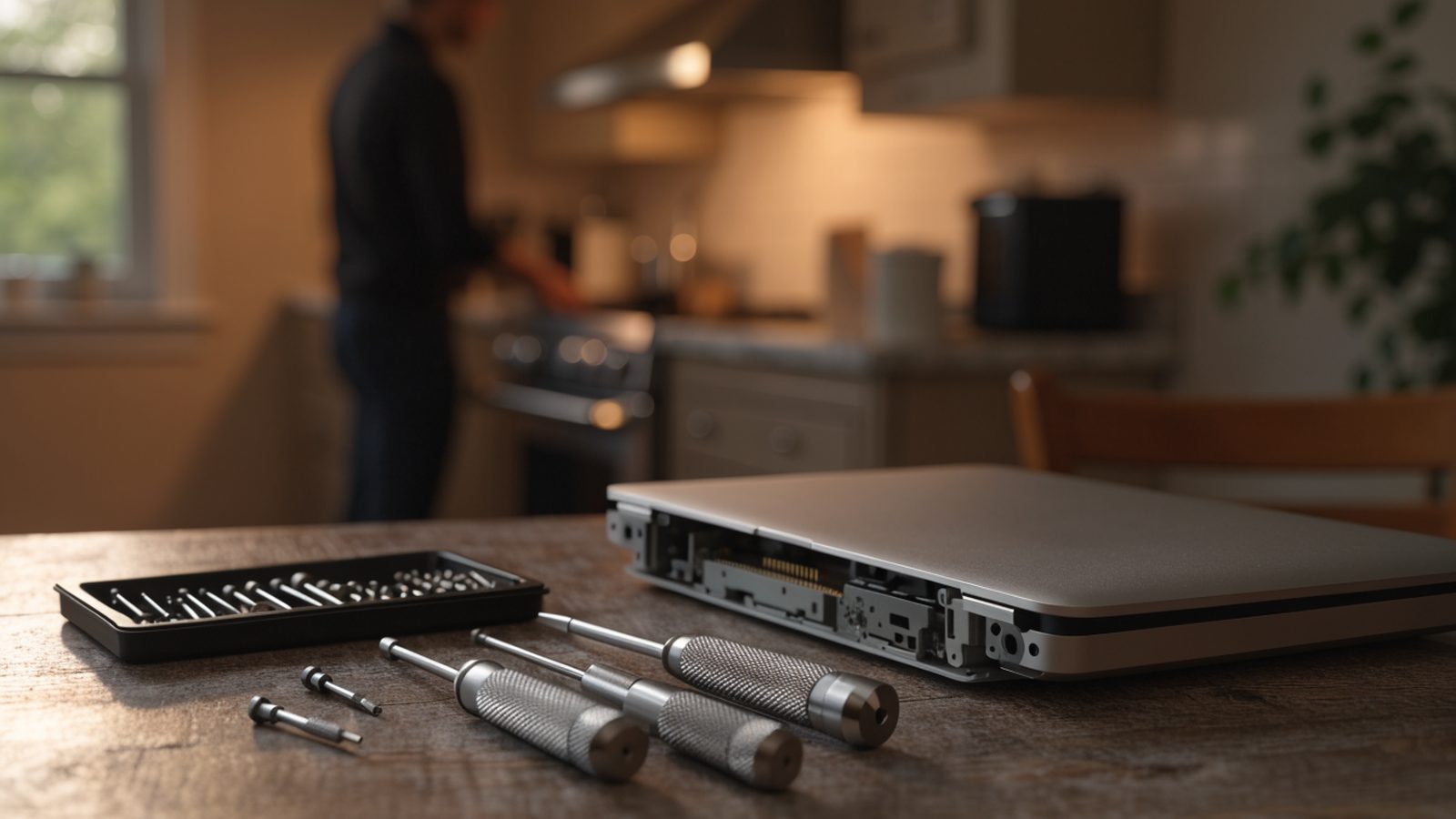
Every technology platform eventually meets its critics on their strongest ground. For the Chromebook, that ground was the school storage closet: pallets of three-year-old laptops with dead batteries, missing keys, and looming expiration dates. Chapter sixteen of our Chromebook history series covers the repairability reckoning: the rare tech controversy that ended with the critics mostly winning.
April 2023: the report that stuck
The US Public Interest Research Group (PIRG) published “Chromebook Churn” in April 2023, and the title alone did half the damage. Its argument, built from school IT interviews: the millions of Chromebooks bought during the pandemic boom were aging badly, and the ecosystem seemed designed to make fixing them irrational. The specifics were hard to dispute: replacement parts scarce or absurdly priced (keyboards and screens sometimes approaching half a new device’s cost), designs full of glue and single-use clips, and AUE dates that could kill software support on a machine whose hardware still worked. PIRG estimated that doubling device lifespans could save US schools nearly two billion dollars.
The report landed in a receptive moment: right-to-repair bills were advancing in state legislatures, and school districts (the platform’s foundational customers) were the sympathetic victims. “Chromebook churn” entered the vocabulary of every education-technology procurement meeting.

What actually changed
The response, over the following eighteen months, was more substantive than most tech-controversy outcomes:
- Ten years of updates. Google’s September 2023 policy — covered in our previous chapter — directly neutralized the report’s sharpest number. A machine supported for a decade can justify a battery replacement.
- Official parts pipelines. Google expanded its Chromebook repair program with partners like iFixit and manufacturer parts stores; Acer, Lenovo, HP, and Dell grew education repair programs with published manuals and student-repair curricula.
- Design shifts. Newer education models advertise screwdriver-only access, keyed connectors, and modular ports, repairability as a procurement checkbox rather than an afterthought.
- Fleet norms. Districts increasingly budget mid-life refurbishment (battery, keyboard, hinge) instead of replacement, precisely the math our repair vs replace guide walks through.
An honest scorecard
Not everything changed. Budget consumer models remain glued and margin-squeezed; parts for older or obscure models still vanish; and a motherboard failure still usually totals a cheap machine, as our motherboard failure guide lays out. The churn fight moved the industry’s center of gravity, not its edges. But compared to where 2019’s AUE anxiety began (buyers discovering expiration dates after purchase), the 2026 landscape of ten-year support, published repair manuals, and orderable parts is a different world.
Why it still matters today
This site exists partly because of this era: a repair-first Chromebook culture, with real parts and real documentation, only became broadly possible once the ecosystem decided fixing these machines was legitimate. The churn fight also hardened the buying wisdom we repeat constantly: check the AUE date, prefer repair-friendly lines, price the battery replacement before the purchase, and it kept the pressure on through the platform’s next transition. As Chromebooks head into the Googlebook era in this series’ final chapters, the ten-year promise made under churn pressure is the anchor keeping existing devices supported through the change.
FAQ
What was the “Chromebook Churn” report?
An April 2023 report by US PIRG’s Education Fund arguing that short update windows, scarce parts, and repair-hostile design made school Chromebooks prematurely disposable, at a cost of billions to districts.
Did Google respond to the report?
Not by name, but the trajectory answered it: ten years of updates (September 2023), expanded repair programs and parts availability, and repairability-focused education models across OEM partners.
Are Chromebooks easier to repair now?
Education-focused models, substantially — many are designed for technician and even student repair. Budget consumer models improved less. Screen, keyboard, and battery jobs on mainstream models are now realistic DIY territory with ordered parts.
Is a Chromebook still worth fixing?
Frequently yes, especially post-2021 models with years of updates left. The decision framework — part cost versus remaining supported life — is covered in our repair vs replace guide.
Next in the series: Google puts Gemini on the shelf, literally, as AI becomes the whole ChromeOS strategy.