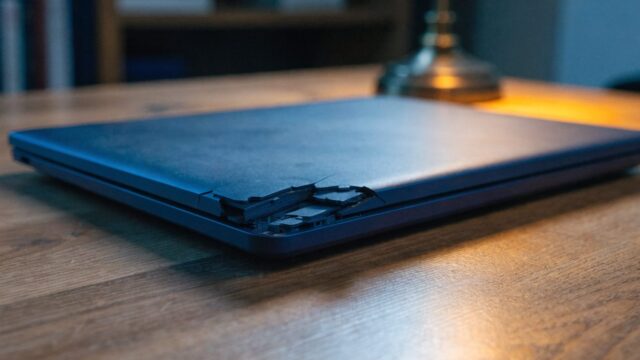
In December 2010, thousands of people across the United States received a plain cardboard box containing a matte-black laptop with no logo, no brand name, and no price. It was the Cr-48, Google’s prototype Chrome OS notebook, and it remains one of the strangest hardware launches in computing history. This is chapter two of our Chromebook history series; if you missed it, start with the 2009 announcement of Chrome OS.
December 7, 2010: the pilot program launches
Google had promised Chrome OS devices for late 2010, but the software wasn’t ready for retail. Instead of slipping the date quietly, Google turned the delay into an experiment. At a Chrome event in San Francisco on December 7, 2010, the company announced the Chrome OS Pilot Program: anyone in the US could apply online, and Google would ship them a free unbranded test laptop in exchange for real-world feedback.
The name Cr-48 was an inside joke: chromium-48 is an unstable isotope of the element chromium. The machine was deliberately anonymous: matte black soft-touch plastic, no logos anywhere, built by Taiwanese manufacturer Inventec. Google reportedly distributed around 60,000 units.

What was inside the black box
On paper, the Cr-48 was an unremarkable netbook: a 12.1-inch 1280×800 display, a single-core Intel Atom N455, 2GB of RAM, and a 16GB SSD. But the details told you where Chromebooks were headed:
- No caps lock key. In its place sat a dedicated search key, a statement that this machine was for finding things, not shouting. It survives today as the Launcher/Everything key.
- No function row. F1–F12 were replaced by browser keys: back, forward, refresh, full-screen, window switch, brightness, volume. That layout is still standard on every Chromebook — see our keyboard shortcuts cheat sheet.
- Free Verizon 3G. Every unit included 100MB of free cellular data per month for two years, because Google knew a cloud laptop was only as good as its connection.
- A developer switch hidden under the battery that disabled Verified Boot, the ancestor of today’s Developer Mode.
- An SSD and no hard drive, years before that was normal at any price, because instant resume was non-negotiable.
What testers actually found
Reviews from pilot users were a preview of every Chromebook debate to come. The good: it booted in about ten seconds, resumed instantly, stayed silent, and the battery ran all day. Updates arrived invisibly in the background. Nothing to install meant nothing to break.
The bad: the single-core Atom choked on Flash video, which in 2010 was most of the interesting internet. Offline, the machine was nearly useless: Google Docs offline editing didn’t exist yet. The trackpad was widely hated. And testers kept asking the same question reviewers had asked in 2009: “What do I do when I need a real program?”
Google absorbed all of it. The feedback loop from those 60,000 testers directly shaped the hardware requirements, the trackpad tuning, and the offline roadmap of the retail machines that followed six months later.
Why it still matters today
The Cr-48 established the Chromebook’s DNA more than any retail device. The keyboard layout, the boot-time obsession, the sealed simple hardware, the cloud-first assumption, and Developer Mode all shipped first on that anonymous black slab. Even the idea that a Chromebook has a defined support lifetime traces back to the pilot fleet: the Cr-48 was eventually the first Chrome OS device to stop receiving updates, foreshadowing the AUE dates every Chromebook carries today.
It also set a cultural tone. Google treated laptop buyers like beta testers and beta testers like collaborators, an approach that built a loyal early community and a mountain of free QA before a single dollar changed hands.
FAQ
Could you buy a Cr-48?
No. The Cr-48 was never sold at retail. Units were given away free through the pilot program, to press, and to developers. Surviving units are collector’s items today.
Why was it called Cr-48?
Cr-48 is an unstable, synthetic isotope of chromium. The joke: this was an unstable, pre-release form of Chrome. The first retail codenames continued the chemistry theme.
What happened to the Cr-48 units?
Google supported them with updates for several years before the hardware was retired from the update program. Many were converted to run desktop Linux by enthusiasts using the developer switch.
Did the Cr-48 have the Play Store or Android apps?
No. Android apps didn’t reach Chrome OS until 2016. The Cr-48 ran web apps only — the purest expression of the original browser-only vision.
Next in the series: Samsung and Acer put the first real Chromebooks on store shelves in June 2011 — and the world mostly shrugs.